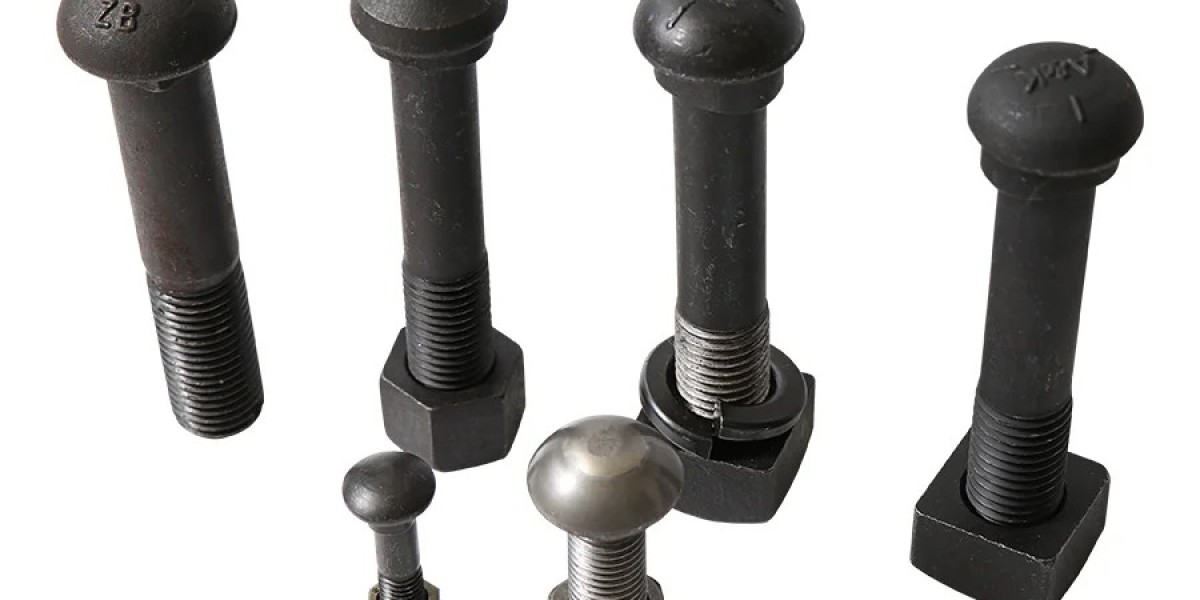

In modern railway infrastructure, the reliability of track connections directly influences operational safety, long-term stability, and lifecycle cost. Among the many components that contribute to track integrity, train track bolts—also referred to as rail bolts or fishplate bolts—play a crucial structural role. These bolts fasten rail ends at a joint, ensuring continuous load transfer and maintaining rail alignment under dynamic stresses.
As a manufacturer specializing in high-strength railway fasteners, HuiBo Railway integrates material science, precision machining, and international railway standards to deliver track bolts engineered for the world’s most demanding rail networks.
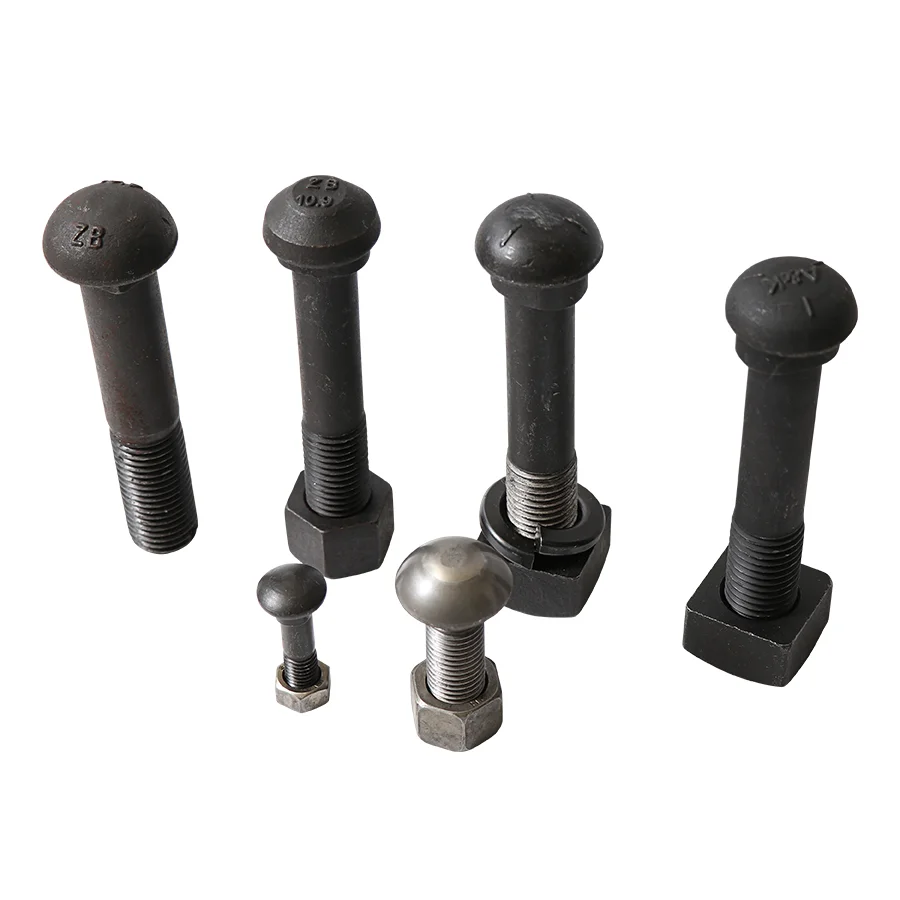
1. Why Train Track Bolts Matter in Modern Rail Systems
Track joints are points of structural discontinuity where vertical, lateral, and longitudinal loads converge. Even with the adoption of continuous welded rail (CWR), bolted joints remain essential in:
Compromise joints connecting different rail profiles
Emergency or temporary track repairs
Turnouts, crossings, and special track components
Expansion joints in extreme-temperature environments
At these locations, track bolts ensure that the fishplate (joint bar) and rail web clamp securely together. A failure in bolt integrity can lead to:
Joint loosening and rail misalignment
Accelerated wear on fishplates and rail ends
Excessive vibration or impact loading
Increased derailment risk
Thus, selecting the proper bolt diameter, length, strength grade, and coating is critical for safe railway operations.
2. Engineering Specifications: Diameter, Length, and Standards
The size of a train track bolt varies depending on the rail section, track design, and national standard. Engineers determine the correct dimensions by referencing industry specifications.
Length Determination
Bolt length depends on:
Rail web thickness
Fishplate thickness
Washer stack height
Required thread engagement
The proper diameter and length must always match the applicable track design documents and railway standards to prevent over-stressing or under-tightening.
HuiBo Railway produces bolts customized to all major rail profiles, ensuring full compliance with international dimensional tolerances and mechanical requirements.
3. Material Selection and Mechanical Properties
Train track bolts operate in harsh environments—heavy vibration, high cyclic loads, moisture, and corrosion. Therefore, material selection is crucial.
Common Bolt Materials
High-carbon steel
Alloy steel for high-strength applications
Mechanical Grades
Grade 8.8 / 10.9 / 12.9 (ISO equivalents)
AREMA Grade 5 / Grade 8
These grades offer:
High tensile strength
Strong shear resistance
Fatigue durability under repetitive load cycles
HuiBo Railway uses controlled heat treatment—quenching and tempering—to achieve uniform hardness and long-lasting structural performance.
4. Surface Coatings and Anti-Corrosion Solutions
Corrosion is a major threat to bolt integrity, especially for coastal, cold, or humid climates. A compromised bolt can introduce joint gaps that lead to rail head batter or joint failures.
Popular Track Bolt Coatings
Hot-dip galvanizing (HDG) – Thick and durable zinc layer
Mechanical zinc plating – Uniform coating for precise fits
E-coating or epoxy coating – Extra environmental durability
Geomet® / Dacromet® – High anti-corrosion, non-hydrogen-embrittlement coating
HuiBo Railway applies coating technologies selected for service longevity and environmental conditions of specific railway systems.
5. Installation Precision: Torque, Preload, and Joint Integrity
Even the best-designed bolt can fail if improperly installed. Bolted joints require controlled torque and preload to ensure long-term tightness.
Key Considerations
Under-torquing → joint loosening
Over-torquing → bolt stretch and early fatigue failure
Proper washer use → prevents embedment and torque loss
Re-tightening schedules → required for heavy-haul or high-vibration tracks
HuiBo Railway provides engineering guidance to ensure each bolt performs as designed throughout its service life.
6. Where Track Bolts Are Used: Applications Across Railway Types
Track bolts engineered by HuiBo Railway are widely applied in:
High-Speed Rail
Ensuring joint precision for tracks operating above 250 km/h.
Heavy-Haul Freight Lines
Withstanding extreme axle loads and high fatigue frequencies.
Metro / Urban Transit Systems
Engineered for compact track structures and vibration-sensitive environments.
Industrial Track & Mining Railways
Built for abrasive conditions, shock loads, and continuous operation.
Passenger Mainlines & Intercity Rail
Balancing speed, comfort, and structural safety.
Conclusion
Train track bolts may appear simple, but their engineering significance is profound. They are the “silent structural guardians” that sustain rail alignment and absorb the forces of every passing wheel. With decades of expertise, HuiBo Railway provides track bolts manufactured to exacting standards, ensuring mechanical robustness and long-term service performance for railways worldwide.