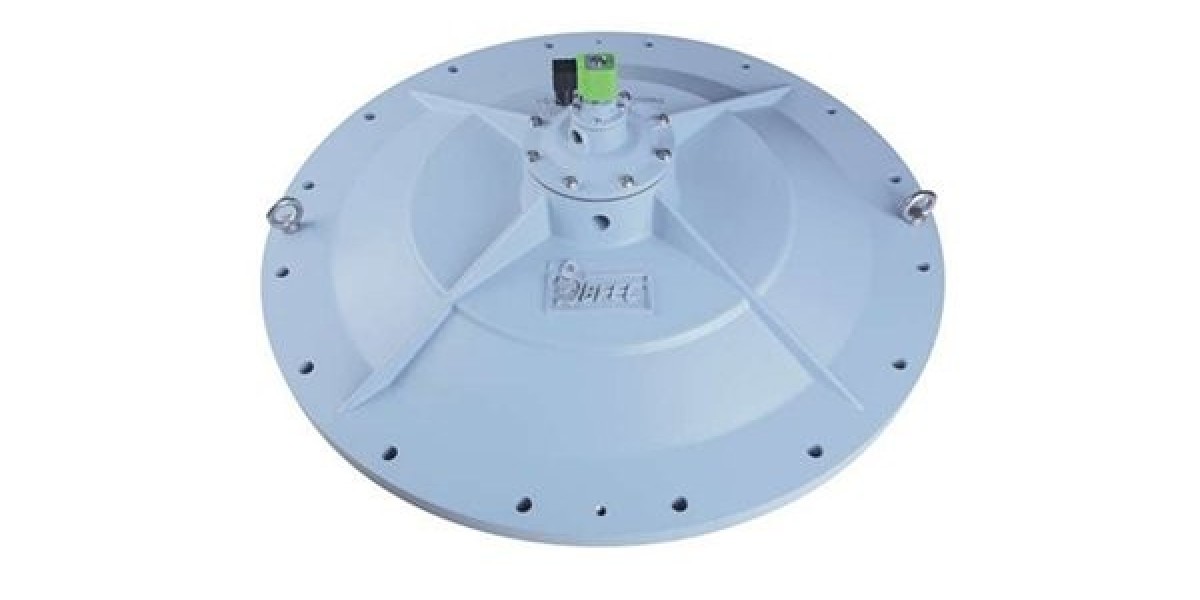

Food processing plants (such as those for flour, starch, sugar, milk powder, feed, etc.) have explosive dust environments (such as starch dust and sugar dust, which have a low lower explosive limit and are prone to cause dust explosions), and at the same time, they must meet strict food hygiene and safety standards. The Explosion-proof Pulse Valve, as the core safety component of the dust removal system, its selection needs to take into account the compliance of explosion-proof performance, food contact safety and adaptability to working conditions. The following is the specific selection logic and key points:
I. Clarify explosion-proof compliance requirements: Based on the grade matching of dust explosion environments
The dust explosion risk in food processing plants should first be determined through the classification of hazardous areas (refer to GB 12476 "Electrical Apparatus for Combustible Dust Atmospheres"), and then the pulse valve of the corresponding explosion-proof grade should be selected.
1. Identify the hazardous areas for dust explosions
Zone 21: Areas where explosive atmospheres formed by mixtures of flammable dust and air may occur during normal operation (such as inside dust collection equipment or near pipelines);
Zone 22: Areas where explosive dust environments are unlikely to occur during normal operation, and even if they do occur, they will only exist for a short period of time (such as areas within workshops far from dust sources).
2. Match explosion-proof electrical grade (for pulse valves with electromagnetic coils)
The electromagnetic drive components (coils, junction boxes) of the pulse valve shall comply with the GB 3836 series explosion-proof standards (corresponding to the international standard ATEX), and the core parameters include:
• Equipment Protection Level (EPL) : Gb level should be selected for Zone 21, and Gc level for Zone 22 (Gb level has a higher protection capability than Gc level).
• Explosion-proof type: Prioritize flameproof type (Ex d) or intrinsically safe type (Ex ia/ib). For dusty environments in food factories, flameproof type (with strong impact resistance) is recommended.
• Dust group and temperature group:
• Dust class: Organic dusts such as starch and sugar dust are mostly classified as Class IIIB (corresponding to the lower class of gas explosion-proof IIA/IIB/IIC, but with higher requirements for flameproof structure).
• Temperature group: Based on the minimum ignition temperature of the dust cloud (for example, about 450℃ for starch dust), select the temperature group T1-T4 (for instance, T4 corresponds to a surface temperature of ≤135℃ to prevent high-temperature ignition of the dust).
3. Obtain the legally certified documents
The manufacturer must be required to provide:
• Explosion-proof qualification certificate (issued by a nationally recognized explosion-proof testing institution, such as Nanyang Explosion-proof Institute);
• Dust explosion-proof certification (clearly indicating the applicable dust type, area and grade);
Third-party test reports (verifying explosion-proof performance, electrical safety, etc.).
Ii. Food-grade compliance: Avoid contamination and safety risks
In a food processing environment, the compressed air that the pulse valve comes into contact with may indirectly contact food (such as through filter bag leakage), or food dust/residue may remain on the valve body surface. It is necessary to meet the safety standards for food contact materials.
Material compliance: Non-toxic, corrosion-resistant, and easy to clean
• Valve body material: Food-grade stainless steel (such as 304 stainless steel, 316L stainless steel) is preferred. Cast iron (prone to rust and contamination) or ordinary carbon steel should be avoided.
• Material of internal components:
• Diaphragm: Food-grade rubber (such as nitrile rubber NBR that complies with FDA 21 CFR 177.2600, or fluorine rubber FKM) must be used. The use of recycled rubber (containing toxic additives) is prohibited.
• Sealing rings and O-rings: They also need food-grade certification to prevent the release of plasticizers, heavy metals, etc.
• Surface treatment: The valve body surface should be smooth without burrs, with a roughness Ra≤0.8μm, facilitating cleaning (to prevent dust/bacterial adhesion), and designed without dead corners (to prevent microbial growth).
2. Comply with food contact standards
Required to provide:
• Food contact material test report (such as FDA, LFGB or domestic GB 4806 series standards, proving that the material is non-toxic and has no migration risk);
• Hygiene grade certification (such as 3-A Sanitary Standards, if it involves air systems in direct contact with food).
Iii. Medium and Environmental Adaptability: Compatible with the working conditions of food factories
The working conditions such as compressed air, temperature and humidity in the food processing workshop are complex, and it is necessary to ensure the long-term stable operation of the pulse valve.
1. Medium compatibility: Resistant to impurities in compressed air
The compressed air in food factories may contain trace amounts of oil mist, water vapor or food particles (such as starch particles). The internal components of the pulse valve need to be resistant to these media
• Oil resistance: The diaphragm and sealing ring must be resistant to mineral oil/synthetic oil (such as lubricating oil leaked from a compressed air lubricator) to prevent swelling and deformation.
• Water resistance: Avoid choosing materials that are prone to hydrolysis (such as ordinary polyurethane). In damp environments, prioritize fluororubber or polytetrafluoroethylene (PTFE) coated components.
• Resistance to particle erosion: For compressed air containing solid particles, wear-resistant valve cores (such as ceramic coatings) should be selected to extend service life.
2. Environmental tolerance
• Temperature range: Food factories may have cold storage (-20℃) or steam areas (above +60℃). The pulse valve needs to meet the working temperature range of -40℃ to +85℃ (with redundancy reserved).
• Moisture-proof and anti-corrosion: In workshops with high humidity (such as ≥85%RH in cooking workshops), the valve body shell needs to be coated with epoxy resin anti-corrosion coating, and the junction box needs to be sealed (with a protection level of IP65 or above).
• Anti-vibration: When close to the production line or fan, an anti-vibration design (such as reinforced brackets, anti-loosening bolts) should be selected to prevent the diaphragm from being damaged due to vibration.
Four. Function and performance matching: Meeting the ash cleaning requirements and ensuring system safety
The blowing capacity of the pulse valve directly affects the dust removal efficiency and needs to be matched with the dust characteristics of the food factory and the parameters of the filter bags.
1. Matching of injection parameters
• Blowing pressure and flow rate: Select based on the material of the filter bag (such as polyester, PTFE) and the particle size of the dust (such as starch dust ≤10μm), for example:
• Fine dust (≤5μm) : A higher injection pressure (0.5-0.7MPa) is required to ensure thorough dust cleaning.
• High-temperature environments (such as baking workshops) : High-temperature resistant diaphragms (such as silicone rubber, with a temperature resistance of ≤200℃) should be selected.
• Pulse width and frequency: Match the PLC control logic of the dust collector to avoid over-blowing (waste of compressed air) or under-blowing (dust accumulation).
2. Reliability and maintenance convenience
• Long-life design: Diaphragm life ≥5 million actions (continuous production in food factories, reducing replacement frequency), spring fatigue life ≥10 million times;
• Universality of vulnerable parts: Diaphragms and sealing rings need to be designed in a standardized manner to facilitate procurement and replacement (avoiding reliance on high-priced original factory parts).
• Fault indication function: It is preferred to use a pulse valve with fault alarm output (such as triggering signals when the coil overheats or the diaphragm is damaged), which is convenient for timely maintenance.
V. Brand and Supply Chain: Prioritize suppliers with rich industry experience
• Industry case: Select manufacturers with experience in supplying Explosion-proof Pulse Valve for food factories (such as those that have served in dust removal projects for flour mills and sugar factories), and avoid directly applying "general-purpose" products;
• After-sales service: On-site installation guidance, regular maintenance training, and emergency fault response are required (due to high downtime losses in food factories).
• Supply chain stability: Avoid choosing products from small workshops and give priority to large-scale manufacturers (ensuring material consistency and certification validity).
Vi. Final Compliance Verification: "Three Checks and Three Confirmations
After the selection is completed, the compliance needs to be verified through the following steps:
1. Check the certification: Verify the validity of the explosion-proof qualification certificate and the food contact material report, and confirm that the applicable working conditions are consistent with the site.
2. Check the material: Open the box to inspect the material certificates of the valve body and diaphragm (such as 304 stainless steel material sheet, FDA test report);
3. Check performance: Conduct sampling tests before installation (such as air tightness tests, blow pressure tests) to ensure that the functions meet the standards.
4. Confirm documents: Collect complete technical data (drawings, instructions, certification certificates) and incorporate them into the factory's safety management archives;
5. Confirm Training: Provide explosion-proof operation and daily maintenance training to operators (key points: power-off pressure relief, no disassembly while powered on);
6. Confirm emergency response: Develop an emergency response plan for pulse valve failures (such as temporarily switching backup valves to prevent dust accumulation due to system shutdown).
Summary
The core logic for food processing plants to choose Explosion-proof Pulse Valve is: based on matching the dust environment with explosion-proof grades, ensuring hygiene and safety with food-grade materials, and guaranteeing long-term stable operation with adaptability to working conditions. It is necessary to comprehensively consider the GB 3836 explosion-proof standard and the GB 4806 food contact standard, give priority to choosing manufacturers with industry experience, and pass strict certification verification and performance testing to avoid the misunderstandings of "explosion-proof for the sake of explosion-proof" and "emphasizing performance over safety", and ultimately achieve dual compliance of "intrinsic safety + food safety".
(Note: The specific selection should be based on parameters such as the factory's dust composition, equipment layout, and compressed air quality. It is recommended to conduct a risk assessment jointly with the manufacturer's technical team before making a decision.)"