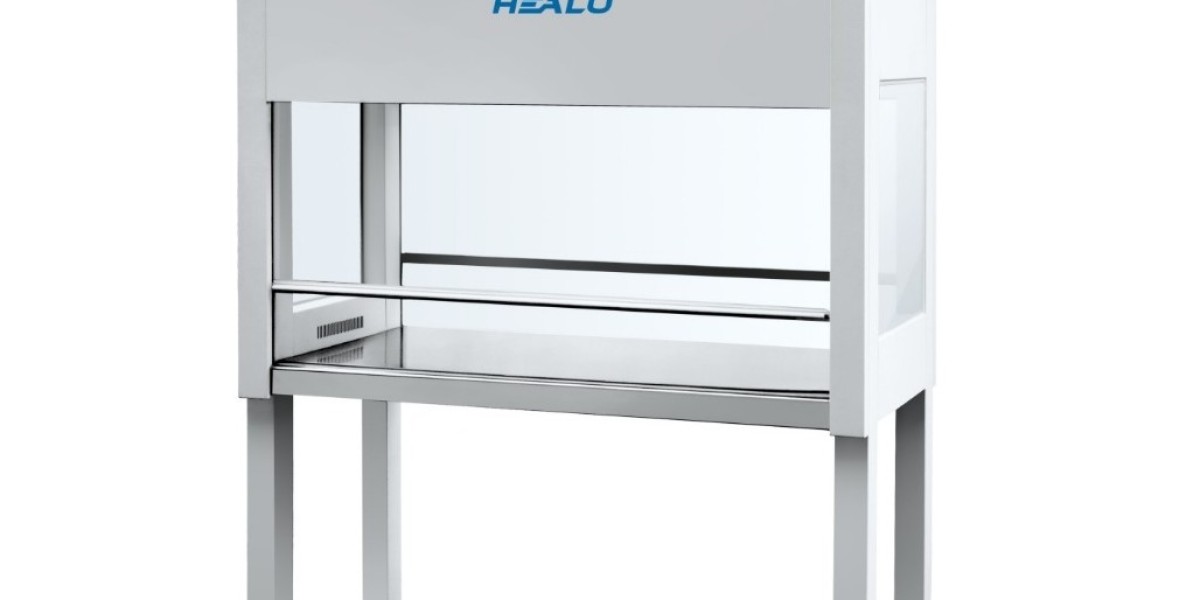

In environments where contamination control directly impacts results, safety, and compliance, airflow engineering becomes a critical design factor. From pharmaceutical preparation and biological research to electronics assembly and quality inspection, laboratories increasingly rely on Laminar Airflow Work Benches to provide clean, stable, and predictable working conditions.
A modern Laminar Airflow Work Bench is not simply a table with filtered air—it is a carefully engineered system designed to eliminate turbulence, control pressure differentials, and maintain unidirectional airflow. Advanced designs developed by manufacturers such as HEALU integrate structural safety, high-efficiency filtration, intelligent airflow management, and energy-efficient components to meet the evolving demands of professional laboratories.

What Is a Laminar Airflow Work Bench
A Laminar Airflow Work Bench is a controlled workspace that delivers a continuous stream of filtered air in a uniform, unidirectional flow. This airflow sweeps airborne particles away from the work surface, protecting samples, materials, and processes from contamination.
Unlike conventional ventilation systems, laminar airflow benches are engineered to maintain consistent air velocity and pressure balance, ensuring predictable cleanliness levels during operation.
Double-Layer Negative Pressure Structure: Eliminating Leakage Risks
One of the most critical safety advancements in modern laminar airflow design is the double-layer negative pressure structure. This configuration ensures that any potential leaks are directed inward rather than outward, effectively eliminating the risk of contaminated air escaping into the laboratory environment.
Key benefits include:
Enhanced operator and environmental safety
Improved containment of airborne particles
Reduced risk of cross-contamination
HEALU incorporates this double-layer negative pressure design to provide an additional level of operational security, particularly in sensitive laboratory settings.
HEPA Filtration: High Efficiency with Low Resistance
At the core of every Laminar Airflow Work Bench is its filtration system. The use of a high-performance HEPA filter ensures removal of airborne particles down to 0.3 microns with extremely high efficiency.
HEALU’s filtration system is designed to achieve:
Low airflow resistance for stable performance
High filtration efficiency over extended service life
More reliable sealing of the liquid tank and airflow channels
This balance between efficiency and resistance is critical to maintaining consistent airflow velocity and reducing energy consumption.
Uniform Airflow Through Multiple Pressure Equalizations
Uniform airflow is essential for maintaining laminar conditions. HEALU Laminar Airflow Work Benches utilize multiple pressure equalization points to distribute air evenly across the entire working surface.
This engineering approach delivers:
Consistent airflow velocity across all zones
Elimination of dead spots and turbulence
Excellent unidirectional flow characteristics
As a result, particles are continuously flushed away from the workspace, supporting stable and repeatable laboratory operations.
Imported Fan Systems: High Residual Pressure with Low Noise
Fan performance directly affects airflow stability, noise levels, and energy efficiency. HEALU selects imported fan systems designed to deliver high residual pressure while maintaining low acoustic output.
Advantages include:
Reliable airflow under varying filter loads
Reduced operational noise for user comfort
Lower energy consumption during continuous use
This combination ensures long-term performance stability while supporting a more comfortable laboratory environment.
Diverse Control Options for Flexible Laboratory Requirements
Laboratories vary widely in their operational requirements. A modern Laminar Airflow Work Bench must therefore offer diverse control options to accommodate different workflows, standards, and user preferences.
Control features may include:
Adjustable airflow speed settings
Filter status monitoring
Alarm and safety indicators
Integration with laboratory management systems
HEALU designs its control interfaces to be intuitive yet configurable, allowing laboratories to tailor performance parameters without compromising safety or reliability.
Application Scenarios Across Professional Fields
Thanks to its advanced airflow engineering, the Laminar Airflow Work Bench is widely used in:
Pharmaceutical and Biomedical Laboratories
Sterile sample handling
Media preparation
Non-hazardous drug compounding
Electronics and Precision Assembly
Sensitive component handling
Dust-free inspection and assembly
Research and Quality Control
Controlled testing environments
Repeatable experimental conditions
In each scenario, consistent airflow and contamination control are essential to achieving reliable outcomes.
Conclusion: Precision Airflow for Reliable Laboratory Performance
The Laminar Airflow Work Bench is a foundational element of modern laboratory infrastructure. Through features such as double-layer negative pressure structures, high-efficiency HEPA filtration, uniform airflow control, and energy-efficient fan systems, it delivers a clean, stable, and safe working environment.
With its commitment to advanced airflow engineering and quality manufacturing, HEALU provides Laminar Airflow Work Bench solutions that meet the practical and regulatory demands of today’s professional laboratories.
https://www.healuair.com/laminar-airflow-work-benches-built-for-reliability-and-control.html